


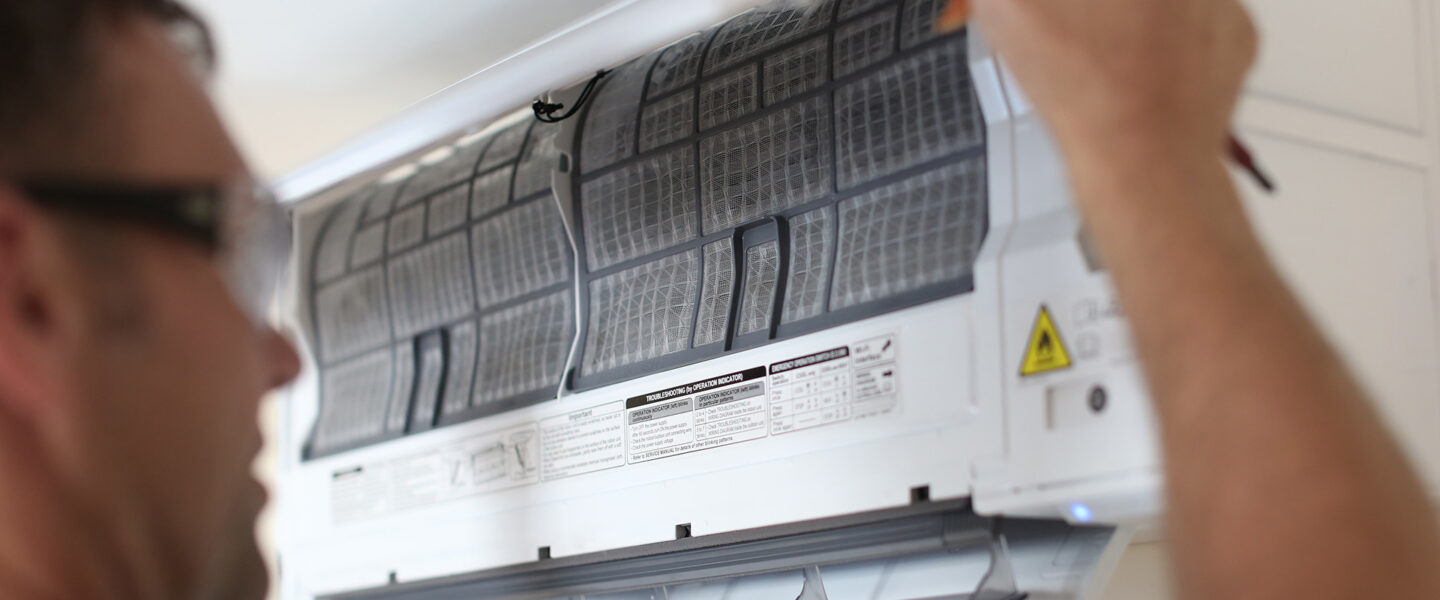
Air conditioning not cooling? Air Options are here to help!
If you’ve just discovered that your air conditioning system isn’t cooling, you’re probably wondering why it’s stopped working, and more importantly, how to get it working again.
With this in mind, we have put together the following diagnostic guide which covers a range of the most common reasons why air conditioning systems stop cooling, things to check when your air conditioning isn’t cooling, and when to contact us.
No Mains Power
The first thing to check when an air conditioning system isn’t cooling, is whether the system is receiving mains power. Power cuts, electrical faults, tripped breakers, blown fuses, deliberate and accidental electromechanical isolation can all result in the system not receiving power.
How to check that an air conditioning system is receiving power depends upon the make, model and type of system in operation. In some cases, a system’s indoor units may have an indicator LED on the front or underneath that is lit when the unit is receiving power. Alternatively, should the system be controlled by a hard-wired, wall-mounted controller, it may be possible to tell if power is present by checking if this controller is lit and operational.
If after following the steps above, the unit shows no sign that it is receiving power, the next thing to check is if the local isolator switch, normally located close to the internal unit, is in the off position. If it is turned off, it may have been switched off accidentally but should only be switched back on if the user is certain, it wasn’t deliberately isolated to prevent damage, or by someone currently working on the system, and it being isolated for very good reason. If the isolator is in the on position but the system is not receiving power, it generally suggests that the air conditioning system has developed a fault and will need to be inspected by a qualified engineer. Should you feel that you need further advice or to book a repair, contact us today.
Low Batteries in Wireless Remote
If the system is controlled by means of a portable, hand-held, or wireless remote controller, the next thing to check is the status of the batteries in the controller. Low batteries can greatly reduce the operational range of the remote meaning that changes programmed on the remote aren’t always registered by the system.
How to check the status of the batteries in an air conditioning remote is usually fairly simple as most hand-held remotes have a battery level indicator on the screen.
If the air conditioning remote’s battery level indicator suggests that the batteries are low, the batteries should be replaced immediately. Once the batteries have been changed, set the system to cooling, (usually designated by a snowflake icon on the remote) and ensure that the system is set to the lowest possible temperature.
If, after following the above steps and leaving the system to operate for 30 minutes, the system isn’t blowing out cool air, it may suggest that the system has developed a fault and will need to be inspected by an engineer. Should you feel that you need further advice or that you need to book a repair, contact us today.
System Not Set to Cooling Mode
The next thing to check is whether the system is set to the correct operational mode. It may sound obvious, but all air conditioning systems need to be set to cooling or automatic mode (switches between heating and cooling automatically) and the correct temperature set.
How to check that an air conditioning system is set to cooling mode depends upon where and what type of system control is installed. Controller types vary but are normally by means of a hard-wired wall-mounted controller, a wireless hand-held remote, a centralised controller or building management system (BMS).
Once the system controller has been located, check it is set to cooling, (usually designated by a snowflake icon on the remote) and ensure it is set to the lowest possible temperature, for testing. You can also do this in automatic mode, although we recommend it is set to cooling when checking cooling performance, as this will eliminate any setting variations with automatic modes.
If after following the above steps and leaving the system to operate for approximately thirty minutes, the air conditioning system isn’t blowing out cool air, it may suggest that the system has developed a fault and will need to be inspected by an engineer. Should you feel that you need further advice or that you need to book a repair, contact us today.
Doors & Windows Are Not Closed Properly
Leaving doors and windows open can greatly reduce the effectiveness of an air conditioning system, causes the system to work harder, decreases energy efficiency and increase the costs associated with running the system.
To maximise the cooling effects of an air conditioning system, it makes sense to ensure that all doors and windows are securely closed whilst the system is in operation.
If, after closing all doors and windows for a period of time and carrying out all previous checks within this guide and your system still fails to perform, it may suggest that the system has a fault and will need to be inspected by an engineer. Should you need further advice or to book an engineer visit, contact us today for details.
The System Has Been Switched Off For Longer Than Usual
When an air conditioning system has been switched off for longer than usual, the ambient temperature within the space to be cooled will increase, especially during the summer. Taking this into consideration, it will inevitably take the air conditioning system longer to cool the area given the contents within the area and room fabric itself will have increased in temperature, all needing to be cooled down to the desired temperature. Temperature stability can often take much longer than people perceive, so please give the system ample time to compensate and cool as required.
After considering the above should you feel that the system is still failing to perform, please contact us for further advice or to book an engineer visit today.
Neglected Servicing & Maintenance
Neglected air conditioning servicing and maintenance will lead to a gradual buildup of dust and dirt on filters, coils and system components. Furthermore, neglected air conditioning maintenance is one of the most common reasons why air conditioning systems stop cooling, or there is a noticeable reduction in performance.
To prevent this and other potential problems, it’s advisable to have your air conditioning system serviced, taking advice regarding frequency of the service and level of service required, given the environment the equipment is installed into, will have a significant impact upon the maintenance regime.
For further advice regarding air conditioning servicing, servicing intervals, or if you would like to book a service call, contact us today.