



The history of HVAC (Heating, Ventilation and Air Conditioning) covers how HVAC has transformed indoor environments. From the invention of the very first air conditioner in the early 1900s to today’s smart, energy-efficient, BMS integrated HVAC systems.
The Early Years of Air Conditioning
In 1902, Willis Haviland Carrier invented the first air conditioner whilst employed as a research engineer at the Buffalo Forge Company in Buffalo, New York. Originally developed to help regulate the temperature and humidity at Sackett & Wilhelms printing works; the system became the forerunner of all modern air conditioning systems.
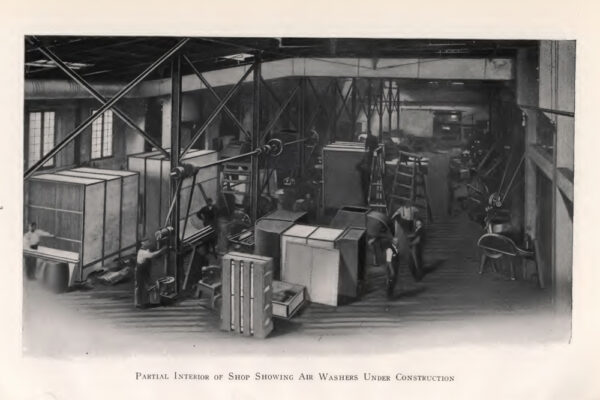
In 1904, the Buffalo Forge company filled a patent on Carrier’s “Apparatus for Treating Air” and in 1906, patent number 808897 was granted. Later in 1906, the Buffalo Forge company sold the very first Buffalo Air Washer to the Chronicle Cotton Mill in Belmont, North Carolina.
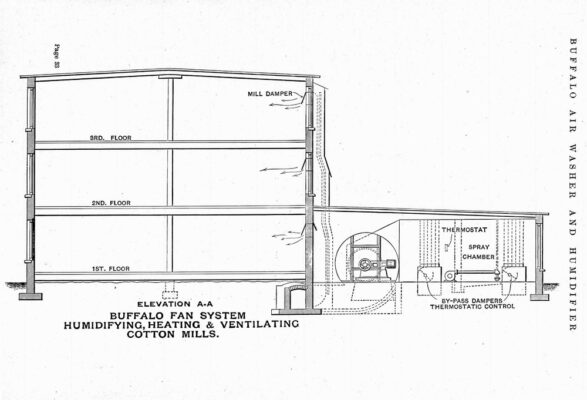
Also in 1906, mill owner Stuart Cramer is credited with the first use of the phrase “air conditioning” in a patent application describing his own process of controlling humidity within textile factories. The phrase was later adopted by Carrier in relation to the marketing of his own systems.
From around 1910, air conditioning systems were starting to be installed in theatres and shops, enhancing public comfort.
The use of HVAC Becomes More Widespread
Following the end of the Second World War, the use of HVAC systems became more widespread across commercial and industrial buildings, from offices and hospitals to manufacturing plants and warehouses.
By the 1950s and 1960s, large-scale HVAC systems were driving big changes in the built environment, enabling the rise of multi-storey and sealed, glass-fronted buildings, which rely on commercial HVAC systems to maintain stable internal climates.
HVAC Efficiency and Innovation
The 1970s energy crisis accelerated the development of energy-efficient HVAC systems, advanced insulation techniques and the wider adoption of heat pumps. This period also introduced programmable thermostats and early building management systems, laying the foundations for today’s intelligent climate control technologies.
Modern HVAC Systems: Smart, Green and Health-Focused
Today, the industry is defined by sustainability, digital innovation and air quality management. Businesses are adopting smart thermostats and BMS connected HVAC systems to optimise performance, reduce energy consumption and lower operational costs.
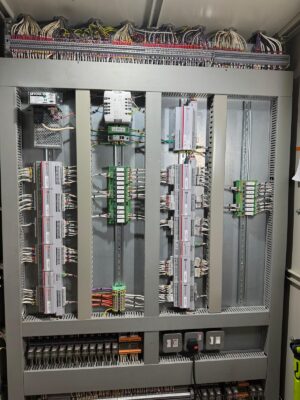
Environmentally friendly solutions such as variable refrigerant flow (VRF) systems and renewable energy integration are now mainstream in commercial settings. At the same time, there is a strong focus on indoor air quality: advanced air filtration systems, HEPA filters, UV-C disinfection and improved ventilation have become critical, particularly in response to global health concerns such as the COVID-19 pandemic.
Why the History of HVAC Matters
From Willis Carrier’s pioneering air conditioner to today’s drive for sustainable HVAC solutions, the industry has consistently adapted to meet the demands of modern architecture and building performance. The evolution of HVAC technology has not only improved comfort but has also enabled bold architectural designs, safer working environments and a stronger focus on energy efficiency.
Whether you’re exploring the origins of air conditioning, the progress of commercial HVAC systems, or the future of green building technologies, the history of HVAC highlights its central role in shaping the modern built environment. If you’d like to know more about some of the terminology used in this article, why not visit our helpful glossary of HVAC terms.